A guide to home textiles
Decorative Pillows, Decoded: How Fabric, Fill, and Finish Shape a Room
A decorative pillow is a small object with an outsized role. It can soften the geometry of a sofa, loosen the formality of a made bed, or introduce a new color without requiring anyone to repaint a wall. But its appearance is only part of the story. The fabric, filling, dimensions, and construction details determine whether a pillow feels inviting, keeps its shape, and fits the habits of the household it joins.
There is a particular confidence to a pillow that looks as though it has simply arrived at its place on the sofa. It is not too plump, not too carefully centered, and not so elaborately ornamented that a person hesitates before leaning against it. Achieving that ease is often less effortless than it appears. A cover that is crisp and tightly woven may make a pillow feel architectural; a relaxed linen cover can give the same cushion a softer, more informal presence. A feather-and-down insert may yield to the hand and spring back, while a firmer filling holds a more deliberate outline.
These distinctions matter because decorative pillows are not merely color swatches with ambitions. They are textiles in daily use, handled, shifted, leaned on, and, in some households, gradually claimed by pets. Their success depends on the meeting of surface and structure: a fabric suited to its setting, an insert suited to its cover, and finishing details that make care and use manageable. Once those pieces are understood, choosing a pillow becomes less like guessing at an accessory and more like making a small, considered decision about how a room should feel.
Begin with the fabric
The cover is the part of a decorative pillow that announces itself first. It supplies the color, pattern, and texture, but it also determines how the pillow feels against a forearm or cheek, how much visual weight it brings to a room, and how it responds to ordinary wear. A smooth cotton sateen, a nubby weave, and a washed linen may occupy similar shades of white, yet they will not read as the same white. Texture catches light, softens edges, and gives even a restrained palette some depth.
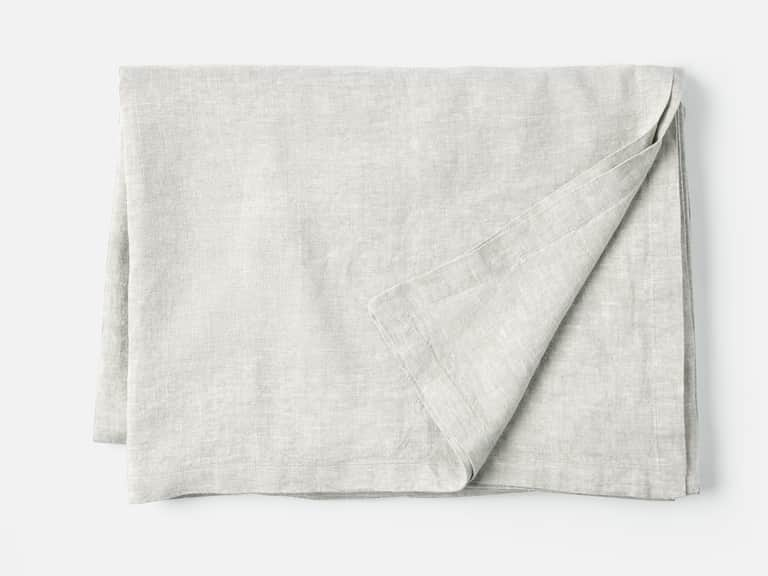
Linen is especially useful when a room needs texture without theatricality. Made from flax fibers, it tends to have a natural variation in its surface: small irregularities that are part of the cloth’s character rather than signs of poor workmanship. Depending on the weave and finish, linen may feel crisp, dry, substantial, or gently softened. It often develops a more relaxed hand with use and laundering. The familiar creases are not a defect to be ironed out of existence; they are part of the material’s particular way of looking lived in.
That character makes linen pillows adaptable. A plain linen cover can settle into a room with patterned upholstery, while a richly textured version can give a simple sofa something to answer back to. On a bed, linen can interrupt the smooth, regular planes of sheets and a duvet. It works particularly well beside other natural-looking materials—wood, wool, cotton, stone—because its irregular surface gives the eye a place to pause. The point is not to make every object rustic. It is to introduce a little variation into a room that might otherwise feel too polished.
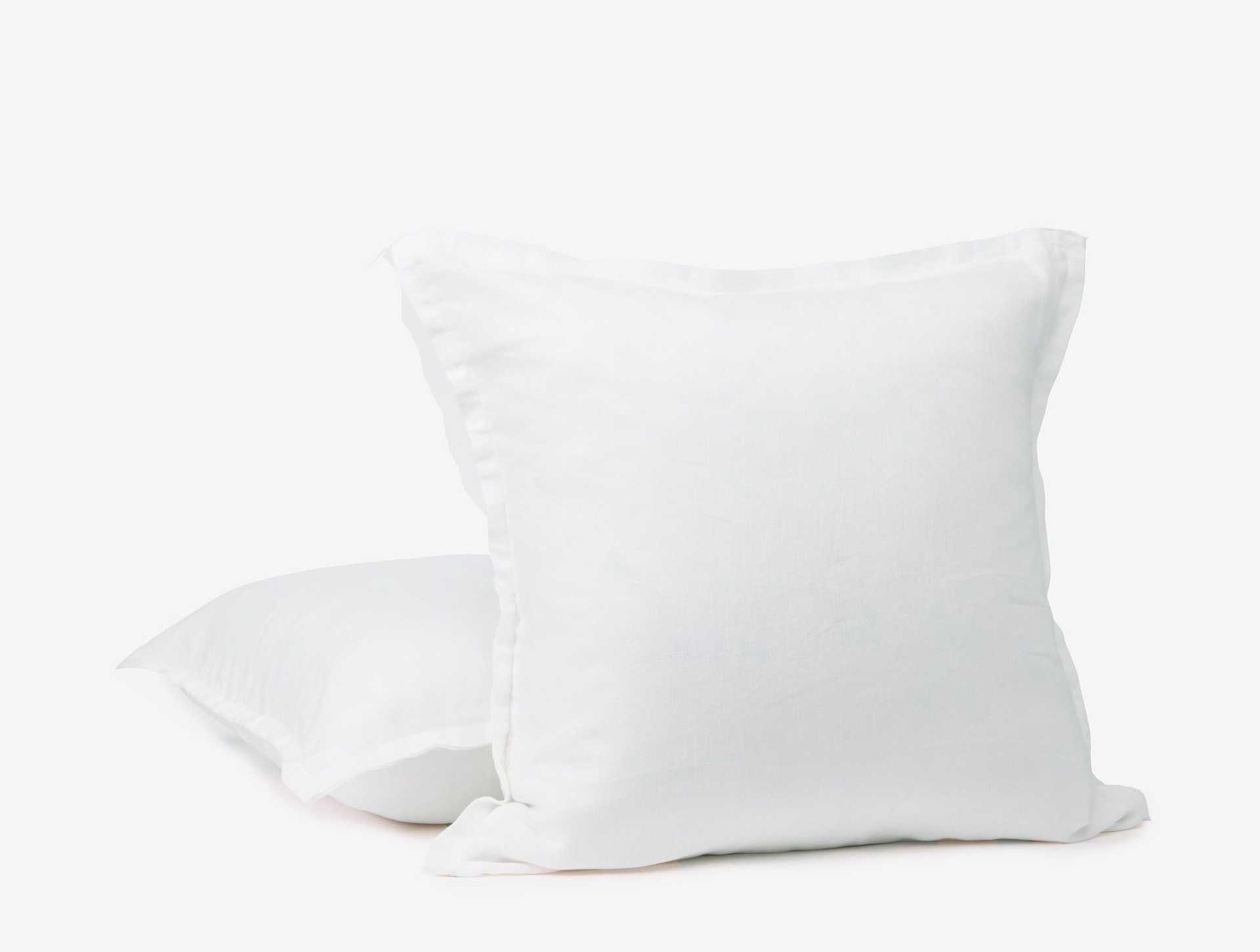
For a straightforward example, the Organic Relaxed Linen Decorative Pillow Cover is made from organic linen grown in Europe and woven in Portugal. Its washed finish gives the surface a relaxed hand, and its 22-by-22-inch dimensions suit a common square insert. The cover is sold separately, so the insert can be chosen to match the desired degree of softness or firmness. That separation is practical as well as aesthetic: a removable cover can be cleaned or changed without replacing the whole pillow.
Other fabrics make different promises. Cotton is familiar, versatile, and available in a wide range of weaves, from matte percale to lustrous sateen. Velvet adds depth and absorbs light, which can make a color appear richer. Wool and heavier woven textiles bring warmth and visual weight, often making more sense in a cool-weather room or as a seasonal layer. No material is automatically superior. The useful question is whether its texture and care requirements suit the room and the people who use it.
The fill: softness, spring, and silhouette
If a cover determines what a pillow looks like, the filling determines what it does when someone encounters it. An insert that is too small for its cover can leave the corners slack and the whole cushion looking underfed. One that is too large may strain the seams and turn a soft pillow into a tightly packed square. The right relationship between cover and insert is a matter of proportion, desired shape, and personal preference—not a universal rule that every pillow should be overstuffed.
Feather-and-down fills are valued for their responsive softness. They compress under pressure, then can be plumped and rearranged. The proportions of feather and down affect the feel: down clusters are light and lofty, while feathers generally provide more structure. A blend may offer a balance between yielding comfort and a shape that can be restored with a shake. For a decorative pillow meant to look relaxed but still hold a recognizable outline, that responsiveness can be appealing.
There is, however, a practical dimension to the romance of a feather-filled cushion. It may need occasional plumping, and its care can be more involved than that of a simple removable cover. People with sensitivities may also wish to consider the materials used in both the insert and its casing. If low maintenance is a priority, a washable synthetic or other alternative fill may be more suitable, though alternatives differ in resilience and hand. Product labels and care instructions are more informative than broad assumptions about any one category.
Think about the pillow’s job. A cushion intended to support someone reading on a sofa may benefit from a firmer, more stable insert. A small accent pillow on a bed can be softer because it is moved aside at night. A long lumbar pillow might offer a useful contrast to square cushions, but its proportions should suit the depth of the sofa or the width of the bed. A pillow that looks handsome in isolation may be awkward when it occupies the same seat as a person.
Fill weight and loft also influence the cover’s appearance. A flatter insert gives a pillow a quieter profile; a loftier one makes it more prominent. If the desired effect is relaxed, a slightly yielding shape can feel natural. If the room depends on clean lines, a firmer insert may keep the outline more disciplined. Neither approach is inherently more elegant. The better choice is the one that allows the pillow to look intentional without making it difficult to use.
Construction is the quiet part of the design
Finishing details can seem minor until they fail. Seams, closures, piping, and edge treatments all affect how a pillow holds together and how it appears from across a room. A well-made cover is not necessarily ornate. Often, the most successful construction is unobtrusive: seams that lie neatly, edges that keep their shape, and a closure that is easy to operate but does not dominate the design.
Piping, also called a corded edge, outlines a pillow and gives it a more defined silhouette. It can sharpen the boundary between two colors or add a small note of contrast. A knife edge, by comparison, leaves a simpler seam and tends to feel less formal. Flanges—fabric extending beyond the seam—create a framed, sometimes more decorative border. These details do not merely alter the style; they influence how a pillow sits. A crisp edge can make a cushion look tailored, while a soft, unstructured edge supports a more casual mood.
A zipper allows a cover to be removed, which makes cleaning and changing inserts easier. Hidden zippers keep the closure discreet, though the opening still needs to be wide enough to remove the insert without undue tugging. Buttons and envelope closures have their own appeal and may be appropriate to a particular design, but they should be considered in light of how frequently the pillow will be handled. A decorative detail that catches on clothing or feels uncomfortable against the body may be less charming in everyday use.
Before settling on a cover, check whether it is sold with an insert. The distinction is easy to miss, especially when browsing quickly. If the cover is sold alone, that can be an advantage: it allows the buyer to select a fill independently and replace the insert later. But it also means dimensions matter. A 22-inch cover, for example, needs an insert chosen with its intended fullness in mind. The exact fit depends on the construction and the look desired; the seller’s guidance, where available, can help prevent a cover that appears limp or strained.
Scale: the room’s proportions in miniature
A decorative pillow takes up little space, but it is read in relation to everything around it. On a deep sofa, a small cushion may disappear. On a narrow chair, an oversized one can become a cumbersome object that must be removed before anyone sits down. A bed provides a broader stage, yet too many layers can turn the simple act of making it into a daily exercise in rearrangement.
Start with the furniture rather than with a count of how many pillows a room is supposed to contain. For a sofa, consider the seat depth, the height of the back, and whether the cushions need to support lounging. On a bed, think about the dimensions of the mattress and the size of the sleeping pillows already in use. A mix of square and lumbar shapes can add variety, but variation works best when it has a reason: a different scale, a related texture, or a color that brings two parts of the room into conversation.
There is no need for perfect symmetry. Two matching pillows can provide order; an uneven arrangement can feel more relaxed. What matters is a sense of balance. If one side of a sofa carries a large patterned cushion, the other side may need a quieter shape or an echo of its color. On a bed, a small accent can connect the pillows to a throw or to the tone of the headboard. The aim is not to make every textile match. It is to let a few details recognize one another.
Color and texture without the commotion
Decorative pillows are a convenient place to experiment because they are relatively easy to move, replace, or cover again. A restrained room can take a deeper accent color without committing an entire wall to it. A patterned pillow can add animation to a plain sofa. Still, variety need not mean a parade of unrelated choices. A room often feels more cohesive when its pillows share at least one quality: a common undertone, a related texture, or a pattern scale that varies without competing.
Neutrals are not as neutral as their name suggests. Warm white, cool white, oatmeal, stone, and pale gray can appear quite different beside a wall, a rug, or natural daylight. Linen’s surface variation helps make these distinctions visible, which is one reason a pale linen pillow can contribute more than an apparently similar smooth cotton one. Before choosing several covers in slightly different shades, consider whether their differences will look intentional together or simply accidental.
Pattern can be introduced through a single pillow or repeated in a quieter way across the room. If a sofa already has a pronounced weave or print, a solid cover may offer welcome relief. If the upholstery is plain, a subtle stripe, embroidered motif, or contrasting edge can supply interest without taking over. The useful test is whether the pillow enhances the room’s existing rhythm or interrupts it. A pillow should be allowed to be noticeable; it need not become the room’s sole subject.
Care is part of the choice
The care label is not an administrative footnote. It describes the kind of relationship a textile expects. A cover that can be machine washed on a gentle cycle may suit a frequently used family room. A dry-clean-only pillow might be better placed where it will serve mostly as an accent. If a cover is removable, that helps, but removable does not automatically mean washable. Fiber, dye, embroidery, piping, and construction all affect the appropriate method.
Linen covers commonly benefit from a gentle approach. Follow the manufacturer’s instructions rather than assuming every linen can be treated identically. Some covers call for cold water and a delicate cycle; others have different requirements. Avoid overloading the machine, which can make it harder for textiles to rinse and move freely. If tumble drying is permitted, a low setting and prompt removal can help limit unnecessary heat and creasing. An iron is optional: the right amount of wrinkle depends on whether the room calls for a relaxed or crisp finish.
For a removable cover, take care when fitting it back over the insert. Fold or compress the insert gently rather than forcing it through the opening, then work it into the corners and distribute the fill. A brief shake or plump can restore its shape. If the insert itself requires cleaning, follow its separate instructions; the cover and fill may have different needs. Regularly airing a pillow and addressing spills promptly can also reduce the frequency of more intensive care.
Washability should be weighed against use, not treated as the only measure of quality. A delicate pillow can still be a sensible choice in a low-traffic room; a washable one may be more practical where cushions are used constantly. The useful distinction is between a textile you will care for willingly and one whose maintenance will become a recurring grievance. Beautiful things are easier to enjoy when their upkeep makes sense in the context of ordinary life.
A short checklist before choosing
- Consider the setting. Is the pillow for a sofa, a bed, an occasional chair, or a room where it will mostly be decorative?
- Choose the surface. Compare the hand, texture, and care needs of linen, cotton, velvet, and other fabrics.
- Check the dimensions. Make sure the cover fits the furniture and that the insert will create the intended silhouette.
- Identify the fill. Decide whether you prefer soft, responsive feather-and-down fill, a firmer shape, or a low-maintenance alternative.
- Look at the finish. Piping, flanges, seams, and closure type all influence appearance and everyday handling.
- Read the care instructions. Confirm whether the cover and insert have separate cleaning requirements.
- Think about use. A pillow should be comfortable to move, sit against, and live with—not simply attractive when untouched.
The value of a well-chosen pillow
It is easy to overestimate what a decorative pillow can accomplish. It will not rescue an uncomfortable sofa or repair a room whose proportions are wrong. But it can make a space feel more considered. It can introduce a touchable surface where everything else is smooth, soften the outline of a chair, or make a bed feel less like a set of carefully aligned rectangles. Its modest scale is part of its appeal: a pillow can change the mood of a room without demanding that the room change around it.
The most satisfying choices tend to balance appearance with use. A linen cover may bring the quiet irregularity a room needs; a feather-and-down insert may make the cushion feel yielding and alive; a hidden zipper can keep the design simple while making the cover easier to remove. Those features are not luxuries in isolation. They are parts of a small system, each shaping how the pillow will look, feel, and fare after the first day.
In the end, a pillow need not announce the care that went into choosing it. It can simply sit on a sofa, inviting someone to lean back. Yet the difference between an object that looks appealing for a moment and one that earns a permanent place is often found in precisely the details we notice only with use: the fabric’s hand, the give of its filling, the sturdiness of its seams, and the ease with which it can be cared for. In home textiles, as elsewhere, the smallest things are sometimes the ones that make a room feel inhabited.