Textile Knowledge · Bedding
What Organic Bedding Certifications Tell You About Fiber and Production
An organic label can be a useful beginning: a clue to how a fiber was grown and, sometimes, how it was processed. It is not a complete biography of a sheet. To understand what lies beneath the label, read it alongside the material description, construction details, care instructions, and the limits of the certification itself.
There is a particular kind of confidence that arrives with a neatly printed seal. On a bedding label, a certification mark can seem to settle several questions at once: what the fiber is, where it came from, what happened to it on its way to the loom, and whether its production can be called responsible. The confidence is not entirely misplaced. Standards and independent certification can make some claims more verifiable than a reassuring phrase on a product page.
But a seal is not a universal verdict. It does not necessarily tell you whether a sheet feels crisp or soft, whether a fitted corner will hold a deep mattress, or how the fabric will behave after years of laundering. Nor does “organic” mean precisely the same thing in every context. The useful question is not whether a label is good or bad, but what it actually covers.
That distinction matters when comparing organic bedding, including linen sheets and duvet covers. Fiber sourcing is one part of a textile’s story; processing, finishing, construction, and care are others. A certification can illuminate some of those chapters while leaving the rest for the product specifications—and the buyer—to interpret.
Begin with the fiber, not the seal
Linen begins with flax, a plant whose stalks yield the fibers used to make yarn. Cotton comes from the cotton plant. The words “organic linen” and “organic cotton” therefore describe a claim about the agricultural source of the fiber, not a promise that every subsequent step is identical or that the finished cloth has a particular hand.
That distinction is easy to lose among the shorthand of bedding descriptions. Organic describes a production standard for the relevant agricultural material; linen describes a textile fiber and fabric. The words answer different questions. A linen fabric may be made from flax grown organically, conventionally, or from a blend. A product’s material declaration should tell you which fibers are present, while its certification information should clarify what standard applies to the organic claim.
Even within a single material category, the feel of a sheet depends on more than its botanical origin. Yarn size, weave, fabric weight, finishing, and laundering all contribute. Linen’s familiar texture may be crisp, airy, weighty, or already relaxed depending on how it has been woven and finished. Cotton percale, woven in a plain one-over-one-under structure, tends toward a different feel from a cotton sateen. A certification does not make those distinctions disappear; it does not usually set a preferred texture, weight, or weave.
When reading a label, look for a specific material statement—such as “100% organic flax linen”—rather than relying on a broad reference to natural or responsible fibers. Then check whether the certification applies to the fiber, the finished textile, or a wider chain of production. The precise scope is more informative than the presence of a logo alone.
What GOTS is intended to cover
The Global Organic Textile Standard, commonly abbreviated GOTS, is a textile-processing standard associated with organic fibers. It is more expansive than an agricultural claim considered in isolation: depending on the product and certification scope, it addresses requirements through stages of textile processing and manufacturing, alongside environmental and social criteria. Its purpose is to provide a defined framework for qualifying textiles, rather than to certify that a product is luxurious, perfectly durable, or suitable for every household.
The details matter. A product might be described as made with certified organic fiber, or it might be identified as a GOTS-certified finished textile. Those statements are not necessarily interchangeable. Look for clear wording about the certified item and, where available, the certificate or license information that allows the claim to be checked. If a product page uses the term “GOTS certified” without explaining whether it refers to the finished product or a particular material input, the sensible response is not suspicion but a request for clarification.
Certification also operates within a defined standard and scope. It is not a guarantee that every component in a bedding set—fabric, thread, button, elastic, label, or packaging—has precisely the same status. Nor does a certification automatically establish where the flax was grown, where it was woven, or where the finished item was sewn. Those are separate facts, which the maker or retailer may state in its sourcing and manufacturing information.
Organic bedding labels are therefore best read as evidence with boundaries. They can help establish that certain requirements were met by the certified material or operation. They cannot, by themselves, tell the whole story of an individual sheet set.
A useful case study: organic linen bedding
Consider a set of linen sheets described as made from GOTS-certified organic flax. That phrase offers a starting point: it connects the fiber to an organic standard. The rest of the description should help answer the practical questions that remain. What percentage of the fabric is linen? Where was the flax grown? Where was the linen woven and the product made? What is the fabric weight? How is the sheet finished? What does the care label recommend?
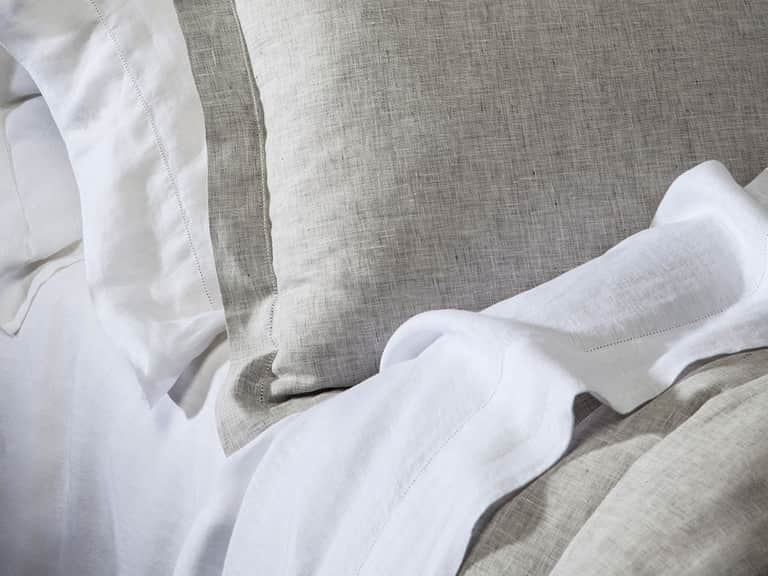
The Naturepedic Organic Linen Sheets provide a useful example of how these details can sit beside a certification claim. The product information describes 185-gram-per-square-metre GOTS-certified organic flax linen, with flax grown in France and production in a GOTS-certified facility in India. It also specifies a sheet set’s contents, a 15-inch fitted-sheet pocket, color options, and care instructions: machine wash warm, tumble dry low, warm iron if desired, and no bleach.
Each detail answers a different question. The certification refers to a defined standard; the stated fiber weight gives a sense of the fabric’s substance; the origin information traces separate stages of the supply chain; and the care directions offer a plan for domestic use. None substitutes for another. A certification cannot tell you the fitted-sheet pocket depth, while a pocket measurement says nothing about the conditions under which the flax was grown.
The description also refers to breathability and moisture management. Those are performance characteristics associated with linen’s fiber and fabric structure, rather than benefits that should be assumed solely from an organic label. Some sleepers may appreciate linen’s airy, textured feel; others may prefer the smoother surface of cotton. A certification does not determine personal comfort, and a natural fiber does not make every sleeper’s experience identical.
Certification is not a comfort rating
People often approach bedding through the body first: warm sleeper, cold sleeper, side sleeper, sensitive skin, a mattress that seems to swallow fitted sheets. Certification speaks to a different set of questions. It may help describe sourcing and processing standards, but it is not a scale of softness or a laboratory verdict on how a particular fabric feels after a night’s sleep.
For comfort, pay attention to construction. Fabric weight, weave, yarn, garment washing, and finishing can shift the experience considerably. A stone-washed linen may arrive with a more relaxed hand than an untreated cloth. A tightly woven fabric may feel smoother or more substantial than a looser one. These descriptions are useful, though they do not replace an opportunity to handle the material or a clear return policy.
Likewise, no certification should be treated as a promise of extraordinary durability. Linen is valued for strength, and well-made bedding can serve for years, but longevity depends on fiber quality, yarn construction, seams, use, and care. A sheet washed frequently in a crowded machine and dried on high heat is living a different life from one washed gently, dried without overdrying, and stored in a dry, ventilated cupboard.
For shoppers with allergies or sensitivities, it is especially important not to overread a label. Organic certification does not establish that a finished bedding product will prevent allergic reactions or eliminate household dust. People’s sensitivities differ, and claims about health or allergens require evidence specific to the claim. Check the materials and finishes, consult a qualified clinician when health concerns are significant, and treat broad assurances with appropriate care.
The production story has more than one address
Textiles travel. Flax may be grown in one country, spun or woven in another, and sewn into bedding somewhere else. Such a route is not inherently a mark of poor practice or excellence; it is a supply-chain fact. A thoughtful product description distinguishes these stages rather than compressing them into the vague phrase “made in.”
For organic linen, a description might identify the country where the flax was grown and the place where it was woven. That information can help a reader understand provenance, but geography alone does not establish the conditions of production. “Woven in Portugal,” for instance, tells you where weaving took place; it does not independently certify the mill’s environmental performance or the finished fabric’s organic status. Conversely, a certification can provide defined assurance without giving the reader every detail of a product’s journey.
Ask what the source material actually says. Is the flax described as grown in a particular region? Is the fabric woven there, or merely finished there? Does “made in” refer to the finished bedding, the textile, or one production stage? Good product information keeps these distinctions legible. If the language is ambiguous, the retailer or manufacturer should be able to explain it.
This is where certifications and traceability complement each other. A standard can set requirements and provide a method of verification within its scope; origin information can map the route of a material. Together they offer more context than either one alone. Neither is a complete substitute for the other.
How to compare organic bedding without getting lost in the labels
A comparison becomes clearer when it follows a consistent order. Begin with what the item is made of, then examine what the certification applies to, and only then consider the details of use. This sequence keeps an attractive seal from standing in for a complete product description.
- Read the fiber composition. Look for the named material and its percentage. “Organic” is not a fiber; flax linen and cotton are.
- Identify the certification and its scope. Check whether the claim concerns the raw fiber, the textile processing, or the finished bedding. Seek verifiable certification information where it is provided.
- Separate sourcing from manufacturing. Note where the crop was grown, where the cloth was woven, and where the finished product was assembled if those details are available.
- Compare construction. Consider weave, fabric weight, finish, seams, closures, and fitted-sheet depth. These affect both use and feel.
- Read care instructions before buying. Washing temperature, drying method, detergent guidance, and ironing recommendations can affect how the textile performs over time.
- Be cautious with broad promises. Claims about health, allergies, environmental impact, or exceptional longevity should be specific and supported, not inferred from the word “organic.”
This method also makes comparisons between fibers fairer. Organic linen and organic cotton may both carry meaningful certifications, yet differ in hand, weight, care, and the way they drape. A label can help establish certain standards; it cannot declare one fabric universally superior to another.
Care is where claims meet ordinary life
A product’s care label may seem like housekeeping, but it is part of its practical identity. It tells you what the maker recommends for keeping the fabric clean and managing its finish. Following those instructions can help preserve the bedding, while ignoring them may make even a carefully sourced textile age prematurely.
Organic linen does not necessarily require elaborate rituals. Many linen sheets are machine washable, though recommended temperatures and drying methods vary by product. Some call for warm water; others specify cold water and a gentle cycle. One manufacturer may recommend low tumble drying, another may prefer line drying. The care tag on the actual item takes precedence over a general rule about linen.
A few habits are broadly useful: avoid overcrowding a washer, use an appropriate amount of detergent, and do not overdry. If the care instructions warn against bleach or fabric softener, take that seriously. Too much detergent can remain in fabric and contribute to buildup; excessive heat can place unnecessary stress on fibers. If a sheet comes out rumpled, that is not necessarily a defect. Linen’s characteristic texture is part of its appeal to many people, though a warm iron may suit those who prefer a more orderly surface.
Care also complicates environmental comparisons. A product’s fiber and certification are only part of its footprint; how often it is washed, how it is dried, how long it remains in use, and whether it can be repaired or repurposed all matter in everyday life. A certification is not a full accounting of a household’s impact. It is one piece of evidence in a much longer relationship between material and use.
The quiet value of a qualified claim
There is no need to distrust a certification in order to read it carefully. In a market crowded with soft-focus language—natural, clean, conscious, earth-friendly—a named standard can impose useful discipline. It makes at least some claims more specific and offers a framework against which they can be assessed. That is valuable, especially when shoppers cannot personally visit a field, mill, or finishing facility.
The mistake is asking the certification to do everything. It cannot make a rough fabric soft, guarantee a perfect fit, or decide whether a color belongs in a particular room. It cannot supply missing information about construction or care. And it should not be stretched into claims its standards do not make.
Organic bedding is easiest to understand when treated as a series of connected decisions: the crop and fiber; the processing standard; the textile’s construction; the finished item’s design; and the way it will be washed, dried, and used. The certification mark is an important signpost along that route. It is not the destination.
So read the label, then keep reading. Ask what the certification covers. Notice the composition, weight, weave, origin, fit, and care instructions. The result is a more useful kind of confidence—not the certainty that one word has answered every question, but the satisfaction of knowing which questions have been answered and which remain yours to decide.